Skip to content
Bocconi Students Energy & Infrastructure Finance

Energy, infrastructure and finance beyond the headlines.

BSEIF is a student-led Bocconi association for students who want to understand the real assets, markets and geopolitical forces behind the global economy.

Energy and infrastructure at scale
  • 01Energy
  • 02Infrastructure
  • 03Finance
  • 04Geopolitics

BSEIF now

Featuring

All announcements

Research 6 November 2026

Venture publishes its paper on thermal management in orbit

The Venture division has published Heat Is the New Constraint in Orbit: Who Will Build the Radiators of the Space Economy, the seventh piece of official divisional research released by BSEIF and the division’s first full paper. It explains why shedding heat limits how much power can be used in space, maps where start-ups can compete in the thermal value chain and sets out how early-stage investors could back them.

Read announcement
01 / 05

Why this space matters

Energy and infrastructure sit where capital, policy, technology and geopolitics meet.

Energy transition

Decarbonisation, renewables and the shift in the energy mix.

Power grids

The networks that move electricity from source to demand.

Transport & logistics

Ports, roads, rail and the movement of goods.

Digital infrastructure

Data centres, connectivity and compute.

from policy shifts to capital allocation
Markets, assets and capital
markets + assets + capital + geopolitics
02

What we focus on

A clear, sector-focused lens on finance and the real economy.

Energy markets

Power, gas, oil and commodities.

Infrastructure finance

Long-term assets, regulation and capital structures.

Macro & geopolitics

Policy, risk and global shifts.

Project finance

Modelling, debt and case work.

New infrastructure

Data centres, grids and transition assets.

03

What we bring

Concrete formats. Useful exposure. Less empty talk.

Speaker events

With practitioners and alumni.

Roundtables

On markets, deals and trends.

Student research

Short notes, explainers and briefings.

Modelling sessions

Financial and project-finance practice.

Networking

For students interested in the sector.

External exposure

Visits, competitions and opportunities.

events / research / modelling / networking
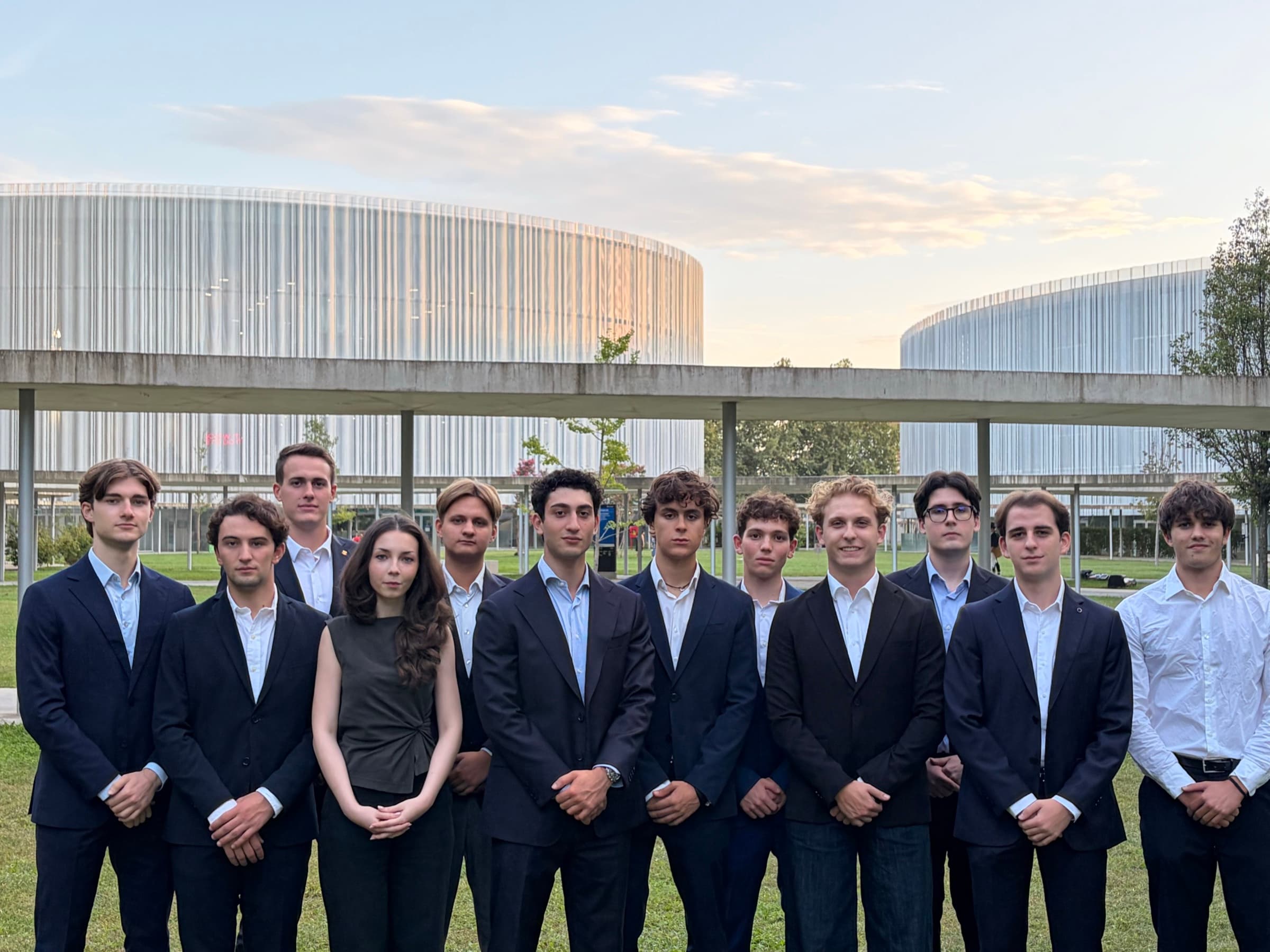
The BSEIF executive committee on the Bocconi campus at golden hour
The executive committee

The people behind BSEIF.

How we work

Serious topics. Open conversations. A practical student community built from zero.

Open

For curious Bocconi students.

Neutral

Analytical first, no agenda.

Practical

Learn by doing and discussing.

Student-led

Built by students, for students.

05

Division research

Official research produced by BSEIF divisions.

Insights

6 November 2026Venture

Heat Is the New Constraint in Orbit: Who Will Build the Radiators of the Space Economy

Heat is a hard limit in orbit: in a vacuum, a spacecraft can shed heat only by radiating it. The International Space Station’s main cooling system needs about 475 square metres and almost 7 tonnes of radiators to reject 70 kW; at that performance, one megawatt would take about 6,800 square metres and nearly 100 tonnes, some $145 million just to launch. Demand is rising on two fronts: there are more satellites, each using more power, and on top come on-board computing and the first orbital data centres. Capital is not following the constraint: the four thermal start-ups profiled have disclosed about $25 million between them, against $420 million raised by Starcloud in 2026 alone. Deployable radiators, adaptive coatings and parts of active cooling loops are the segments most open to newcomers, while heat pipes are protected by qualification barriers and heat pumps still have no commercial entrant. Exits run through M&A, and the largest values sit with players that reached markets beyond space. The main risks are that orbital data centres remain hype, that qualification cycles delay revenue, that customers are few and concentrated, and that primes build thermal systems in-house.

Tommaso Castelli Rivolta, Chris Vittorio Joannes Agnelli, Ahmet Selim Birışık, Haya Kret, Riccardo Maggioni

Reviewed by Riccardo Gilli, Gregorio Pesente · Approved by Riccardo Gilli, Head of Venture

Space economyThermal managementVenture capitalStart-ups
Read publication

5 November 2026Infrastructure & Transport Logistics

SAC: acquiring a 51% stake in Sicily’s airport platform

This independent report evaluates SAC’s Catania and Comiso airports as a potential investment for infrastructure private equity funds and institutional investors, placing the opportunity within the broader context of institutional ownership and consolidation in Italy’s airport sector. The analysis weighs Catania’s gateway position and commercial growth potential against Comiso’s losses, finite concession rights and the funding and capital-recovery requirements of Catania’s approximately €1.3bn development program. A finite-concession DCF estimates enterprise value at €173.23m and the value of a 51% equity interest at €97.46m. Complementary returns analysis, based on a separate €100.62m entry-price assumption, generates a modeled ten-year IRR of 7.97% with no interim dividends, below an illustrative 10% hurdle. These findings frame SAC as a conditional Core+ opportunity whose investment viability depends on disciplined entry pricing, verified tariff recovery and committed development financing.

Leonardo Gatti, Vittorio De March, Ana Carolina Nacif, Francesco Motta, Vittorio Pisa, Shreya Prakash

AirportsValuationPrivate equityItaly
Read publication

4 November 2026Energy

Financing Battery Energy Storage: Revenue Models, Risk Allocation and Bankability

The growing penetration of variable renewable energy sources is increasing the need for flexibility in electricity systems. Battery Energy Storage Systems (BESS) address this need by storing electricity and adjusting their output according to market conditions and grid requirements. However, their development raises a fundamental financial question: how can projects attract long-term financing despite uncertainty surrounding revenues and operational performance? This publication examines the main revenue models, the associated risks and the mechanisms available to improve bankability, using institutional data, commercial agreements and financing transactions, with a section dedicated to the Italian market.

Antonio Puliafito, Marco Frizzele, Matteo Mascaretti, Simone Zordan, Gaetano Pinho, Alfonso Santojanni

Battery storageProject financePower marketsItaly
Read publication

Welcome to BSEIF.

Join an event, apply to the association or follow our upcoming research and activities.